Showing posts with label A2 elementary. Show all posts

Thursday, 11 March 2021

Stop Saying VERY! Use These Advanced Adjectives to Instantly Improve Your English Fluency

 #vocabulary #English #ielts #ieltsprep #ieltsspeaking


Very is one of the most overused words in the English language and the worst thing is that there is absolutely no need for it! As I will show you in this post, there are many more advanced (and beautiful) words that you can use to describe something or someone more eloquently


Stop Road Sign Warning - Free vector graphic on Pixabay


Using the adjectives in this table can help you sound instantly more fluent and improve the quality of your communications in English. They can also help you achieve a better band score in the IELTS speaking test. 


Avoid saying very


Say:

Avoid saying very

Say:

big

enormous

good

Excellent/ superb

small

tiny

easy

simple

interesting

riveting

fast

rapid

angry

furious

upset

devastated

happy

delighted

stupid

idiotic

cute

adorable

old

ancient

boring

tedious/ dull

bad

atrocious/ awful

busy

swamped

ugly

hideous

Thursday, 21 January 2021

Present Continuous: Verbs with -ing

 Suitable for beginners CEFR A1+

 #PresentContinuous #EnglishGrammar #Tenses #grammar


 events, agenda, appointment, calendar, computer, connection, copy space, coworking space, date, day, deadline, design space, desk, desktop, device, digital, display, drink, electronic, headphones, internet, laptop, management, meeting, mockup, monitor, music, network, notebook, organization, organize, organizer, plan, planner, planning, playlist, portable, reminder, schedule, screen, smartphone, technology, time, to do, product, font, electronic device, coffee cup, metal, office equipment, brand, drinkware, logo, personal computer, tableware, cup


Use present continuous to talk about things happening in the present moment, right now or things that you have made plans for in the immediate or near future.


To make sentences in present continuous use: 


             am/is/are (not)  + verb + -ing 

For example:

Where is she?

                        She's walking the dog. 

What's he doing?

                            He's doing his homework. 

Are you giving me a pay rise?

                                                I'm not giving you anything.

What are you doing?

                                  I can't talk right now. I'm having a shower. 

Are they coming to the party?

                                              They aren't coming to the party later. 


Notice that in the interrogative (question form) the pronoun and the verb 'to be' switch places. 

So, now you know how to make sentences and questions using present continuous, try these activities to test your knowledge: 


Activity 1

Complete the sentences with present continuous.

1. ________ you _________ dinner? (have)
2. Stop, you____ _________ a mess! (make)
3. I____ ________ him at the cinema at 7pm. (meet)
4. ____ he _________ on holiday with you next year? (go)
5. He___ not _______. He isn't hungry. (eat)


Activity 2

Make your own sentences in present continuous to describe what is happening in the picture.

File:Rex Barber - Peppermint Grove Beach cartoon.png


Activity 3

Write about what you are doing today/tomorrow or right now in present continuous or go to your local park and describe what is happening there.

Some useful verbs to use are:
be
do
make
have
go
play 
eat 
drink
clean
stay
take
meet
travel
wear 

Write your answers in the comments! See you again soon for another FREE English lesson


Wednesday, 25 November 2020

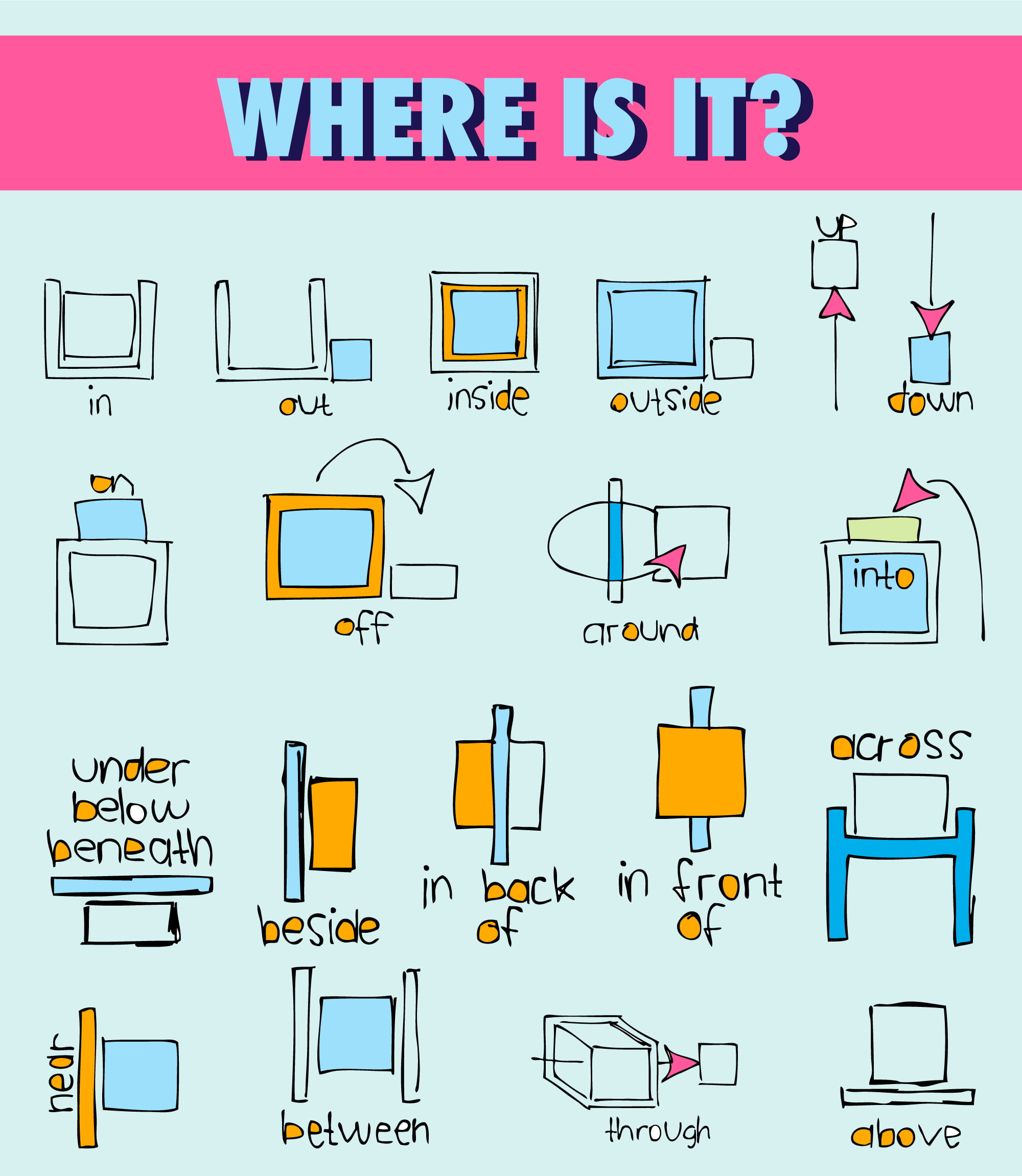
English for Beginners: Prepositions of Place

 Suitable for beginners CEFR A1+

Prepositions tell us the relationship between two or more people, places or things. Prepositions are commonly followed by nouns, noun phrases or pronouns

e.g. The cat is on the bed

There are over 100 prepositions in English! Some are single words and some consist of two or three words that are used together. This lesson is about prepositions of place, which tell us the location of something in relation to something else, or where something is. 


5 Types of Prepositions: An Easy Guide – INK Blog


Activity 1

Complete the sentences with a preposition of place.


400+ Free Living Room & Room Illustrations - Pixabay


1. The pink chair is _________ the fire. 

2. The logs are _____ the basket. 

3. A glass of wine is ____ the table. 

4. The desk is ___________ the window. 

5. The blue flowers are ___________ the desk and the wardrobe.  

6. There are some books ____ the desk ______ the lamp.  

7. The pink chair is _______ the footstool. 

8. The footstool is __________ the pink chair.  

9. The rug is ________ the small table. 

10. The picture is ________ the fireplace.  

11. The ocean is  __________ the window.

Wednesday, 5 August 2020

Future Simple

Suitable for beginners CEFR A1+

#grammar #futuresimple

Crystal Ball with Hands | Free SVG


Use future simple to talk about or make predictions about things that haven't happened yet.

19: Timeline: The Future Simple | Download Scientific Diagram

To make affirmative sentences in future simple use this structure:


will  +  bare infinitive

For example

We will go to Italy on holiday next year.
I will do my homework later.
She will have her first piano lesson on Monday.
It will be cold and dark in the UK in January.


To make negative sentences in future simple use this structure:


will not (won't) + bare infinitive

For example

He won't arrive until tomorrow.
They won't make it. 
It won't be possible to order it until Monday. 
The children won't eat spicy food. 


In the interrogative (question) form will/won't and the subject change places:

For example

Will there be food at the party?
Won't it be very cold there in January?
Will you come over later?
Won't he want any dinner?

So, now you know how to make sentences using future simple, try these activities to test your knowledge:


Activity 1

Complete the sentences with an appropriate form in the future simple.

1. ______ robots ________ teachers in the future? (replace)
2. How many grandchildren do you think you ______ _______?
3. ________ your brother ______ here soon? (be)
                          Yes, he _______.
4. She didn't eat her lunch today, so I think she _____ ______ hungry later. (be)
5. Do you think people ______ ________ on mars in the future? (live)


Human mission to Mars - Wikipedia

Activity 2

Make your own sentences in future simple with the following words.

1. long summer / be / this year
2. shopping / tomorrow
3. a prize / for the winner?
4. Flight BA147 / depart / from gate C5 / at 10.15.
5. Maybe / rain tomorrow / maybe / or


Activity 3

Write about what you think life will be like 50 years from now. Make predicitions using future simple.

Some useful verbs to use are:
be
do
make
have
live
replace
travel

Write your answers in the comments! See you again soon for another FREE English lesson


Wednesday, 29 July 2020

Life in the UK: The History of Stonehenge

Suitable for intermediate and above CEFR B1+

Stonehenge is one of the most famous sights in Great Britain, but, with UNESCO World Heritage status, it is also considered one of the most important historical sites in the world.

Image result for stonehenge

Vocabulary

oval, ditch, masterpiece, ancient, huge, solstice, monument, megalith, archaeologists, rituals, burials, crops, harvest, excavated, worship, horseshoe, deity, horizontal, aligned

Use an English dictionary or translator to write down the meaning of these words before reading or listening to the text.

What is a henge?

A henge is basically a ring of raised earth that is roughly circular or oval in shape with a ditch running around it. There are usually between one and four entrances and they are thought to have been used for rituals and burials.

There are many stone circles and henges throughout The British Isles, but Stonehenge has the largest stone megaliths and has therefore always been the most famous. The largest stones, also known as sarsens, stand up to 9m tall and weigh an average of 25 tonnes. Some ancient henges have been reconstructed with wood rather than stone, like this one in Northumberland.

See the source image

The Story of the Stones

Stonehenge is located in a field near Salisbury in Wiltshire, England. Although the exact date is unknown, the stones are thought to have been placed between four and five thousand years ago. Stonehenge is a masterpiece of ancient engineering and it would have taken a huge effort from many people working with the most basic tools.

Why the Neolithic and Bronze Age people of Britain put such effort into constructing Stonehenge remains a mystery, but curiously, the stones are exactly aligned with the movement of the sun. Recording the seasons and the solstices were very important for the emergence of agriculture and farming to work out the annual schedule for sowing and harvesting crops, but archaeologists believe that Stonehenge was much more than an early calendar because of the number of human and animal bones excavated near the site. For this reason it is thought that Stonehenge was a place for spiritual rituals and celebrations associated with the worship of a solar deity

Image result for stonehenge


The first stones were laid in a double circle and were known as bluestones, but these were replaced by the horseshoe of large sarsens we see today in about 2500BC. Originally, all of the sarsens would have had a stone laid horizontally across the top to connect them, which would have created a magnificent inner and outer circle of stone arches. Over time, however, some of the stones were removed, possibly to be used for other buildings or construction. 

Many people that feel a spiritual connection to the stones or follow ancient religions and practices, such as pagans and druids, still gather at Stonehenge every year to watch the sunrise during the summer and winter solstices.  

See the source image


Activity 1

Answer these questions about the text true or false. 

1. Stonehenge is one of many 'henges' that can be found around Britain. T/F
2. Stonehenge was built in 2500BC. T/F
3. The largest stones are called sarsens. T/F
4. Stonehenge is in Wiltshire, in the South of England. T/F
5. People have parties at Stonehenge in the summer months. T/F


Activity 2

Write about an ancient monument or famous historical site in your country using the passive voice. To make a sentence in the passive voice of present simple use the verb 'to be' with a past participle. For example:

Stonehenge is near Salisbury - present simple
Stonehenge is located near Salisbury - present simple passive voice

For more information about how to use the passive voice check out these lessons:


References
The History of Britain: 2016: Igloo Books: China

Wednesday, 15 July 2020

Conjunctions: and, so, but, because

Suitable for Elementary CEFR A2+

And or but?

We use and to add relevant information

For example:

I have a cat and a dog.


cat-and-dog | editgif.com/cat-and-dog.jpg | Katlene Niven | Flickr


or join two sentences that are similar or to be taken together. These are usually two sentences with positive meaning or two sentences with negative meaning.

For example: 

He got up at 7am and had a shower
[_____________]       [__________]          
     positive 😊              positive 😊

Wake Up Time | Free SVG

She is very afraid of spiders and hates it when she finds them in the bathroom.
[_____________________]        [____________________________________]
              negative 😟                                                 negative 😟


We use but to join two different or contrasting sentences. But is often used to join a positive sentence with one that has negative meaning.

For example:

We ordered some food but it arrived late.
[_________________]       [__________]
          positive 😊                 negative 😞    
 
He is very slim but he isn't very healthy.
[___________]      [_______________]   
  positive 😊                 negative 😞

They went to the party but they didn't enjoy it.
[_________________]       [_____________]
         positive 😊                     negative 😞

So or because?

We use so to tell the results of an action or situation and we use because to tell the cause of an action or situation.

For example:

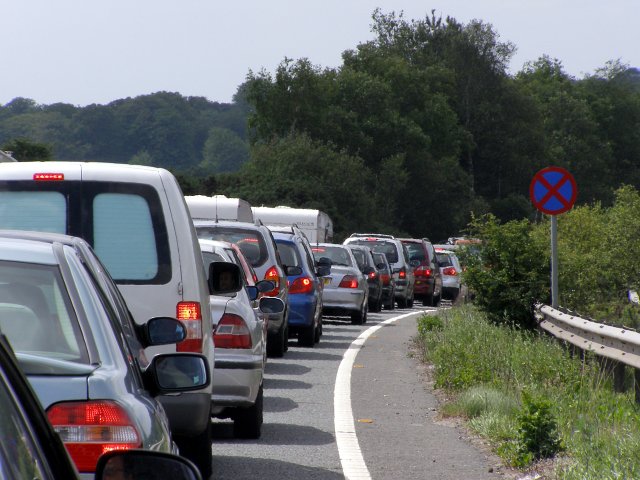
I'm going to be late because the traffic is awful.
[______________]                [_____________]
         situation                                  reason
           2nd                                        1st

File:Bank holiday weekend traffic jam on the A31(T), New Forest ...


The traffic is awful so I'm going to be late.
[_____________]       [______________]
       situation                          result
         1st                                 2nd

She wasn't busy so she helped me.
[____________]      [___________]
      situation                    result
          1st                          2nd

The dog was happy because he had fun at the park.
[_______________]              [_________________]
        situation                                     reason
           2nd                                           1st


Activity

Complete the sentences with the correct conjunction.

1. I like chocolate ______ fruit.
2. It was raining ______ we took our umbrellas.
3. They always studied hard _____ they passed their exams.
4. She was late for class _______ the bus arrived late.
5. It was cold when I left the house this morning _____ I put on a hat and a scarf.


Post your answers in the comments and don't forget to like and subscribe for more free English lessons!


Stop Saying VERY! Use These Advanced Adjectives to Instantly Improve Your English Fluency

 #vocabulary #English #ielts #ieltsprep #ieltsspeaking   Very is one of the most overused words in the English language and the worst thing ...