Showing posts with label English vocabulary. Show all posts

Wednesday, 29 July 2020

Life in the UK: The History of Stonehenge

Suitable for intermediate and above CEFR B1+

Stonehenge is one of the most famous sights in Great Britain, but, with UNESCO World Heritage status, it is also considered one of the most important historical sites in the world.

Image result for stonehenge

Vocabulary

oval, ditch, masterpiece, ancient, huge, solstice, monument, megalith, archaeologists, rituals, burials, crops, harvest, excavated, worship, horseshoe, deity, horizontal, aligned

Use an English dictionary or translator to write down the meaning of these words before reading or listening to the text.

What is a henge?

A henge is basically a ring of raised earth that is roughly circular or oval in shape with a ditch running around it. There are usually between one and four entrances and they are thought to have been used for rituals and burials.

There are many stone circles and henges throughout The British Isles, but Stonehenge has the largest stone megaliths and has therefore always been the most famous. The largest stones, also known as sarsens, stand up to 9m tall and weigh an average of 25 tonnes. Some ancient henges have been reconstructed with wood rather than stone, like this one in Northumberland.

See the source image

The Story of the Stones

Stonehenge is located in a field near Salisbury in Wiltshire, England. Although the exact date is unknown, the stones are thought to have been placed between four and five thousand years ago. Stonehenge is a masterpiece of ancient engineering and it would have taken a huge effort from many people working with the most basic tools.

Why the Neolithic and Bronze Age people of Britain put such effort into constructing Stonehenge remains a mystery, but curiously, the stones are exactly aligned with the movement of the sun. Recording the seasons and the solstices were very important for the emergence of agriculture and farming to work out the annual schedule for sowing and harvesting crops, but archaeologists believe that Stonehenge was much more than an early calendar because of the number of human and animal bones excavated near the site. For this reason it is thought that Stonehenge was a place for spiritual rituals and celebrations associated with the worship of a solar deity

Image result for stonehenge


The first stones were laid in a double circle and were known as bluestones, but these were replaced by the horseshoe of large sarsens we see today in about 2500BC. Originally, all of the sarsens would have had a stone laid horizontally across the top to connect them, which would have created a magnificent inner and outer circle of stone arches. Over time, however, some of the stones were removed, possibly to be used for other buildings or construction. 

Many people that feel a spiritual connection to the stones or follow ancient religions and practices, such as pagans and druids, still gather at Stonehenge every year to watch the sunrise during the summer and winter solstices.  

See the source image


Activity 1

Answer these questions about the text true or false. 

1. Stonehenge is one of many 'henges' that can be found around Britain. T/F
2. Stonehenge was built in 2500BC. T/F
3. The largest stones are called sarsens. T/F
4. Stonehenge is in Wiltshire, in the South of England. T/F
5. People have parties at Stonehenge in the summer months. T/F


Activity 2

Write about an ancient monument or famous historical site in your country using the passive voice. To make a sentence in the passive voice of present simple use the verb 'to be' with a past participle. For example:

Stonehenge is near Salisbury - present simple
Stonehenge is located near Salisbury - present simple passive voice

For more information about how to use the passive voice check out these lessons:


References
The History of Britain: 2016: Igloo Books: China

Wednesday, 1 July 2020

IELTS Sports Vocabulary

Suitable for pre-intermediate CEFR B1+

#IELTS #vocab #sport

Activity 1

Complete the table with the correct vocabulary

running       football        snowboarding        scuba diving          net                                                         rink               court                        goggles                         gloves 
course          boxing           weightlifting            fins            clubs


 SportPlace
 Equipment
 1
 pitch ball / goal
 2
 ring _____ / shorts
 3 tennis
  ball / ___ / raquet
 4
 ocean / sea
 oxygen tank / ____
 5 golf
  _____ / irons
 6 pool costume / _______
 7 mountain slopes board
 8
 gym weights
 9 ice-skating
  skates
 10 track shoes / spikes


Activity 2

Do any of these sports appeal to you? Why/Why not?
Which of these activities do you think are most popular? Explain why.

Record yourself speaking the answers or write your answers in the comments!


person weightlifting painting, man, lifting, black, steel barbell ...

Activity 3

Describe at least one example of each type of sport. Use a dictionary to help you.

1. Motor
2. Winter
3. Water
4. Equestrian
5. Indoor
6. Track and field
7. Team
8. Indoor

Record yourself speaking the answers or write your answers in the comments!


Sources

Ready for IELTS:Sam McCarter:2010:Macmillan Publishers:Thailand


Wednesday, 3 June 2020

10 Traditional British Foods You've Probably Never heard Of

Suitable for pre-intermediate CEFR B1+

#BritishCuisine #BritishFood #UKFood #BritishCulture #LifeintheUK #LIUK


Activity 1
Look up the meaning of new vocabulary before reading.


It's probably fair to say that British food does not have the best reputation. At least, in all the years I've greeted international students at summer schools in the UK I've never heard anyone mention that they wanted to come to the UK to sample the Great British cuisine! British food is often described as plain, tasteless and bland, but I happen to think this is mostly down to bad cooking and not the cuisine itself.

Fish and chips and Cornish cream teas are undoubtedly the most famous British traditions, but there are many more scrumptious regional dishes packed into the British Isles, so here are my top 10 traditional British foods you probably haven't heard of before.

10. Bubble and Squeak

Bubble and squeak breakfast at Hobba | Katherine Lim | Flickr

These classic British breakfast patties are made from mashed potatoes and cabbage or other vegetables left over from a Sunday roast dinner. They are usually pan-fried and served with eggs.

9. Ulster Fry

20 Irish Foods Explained Just in Time for St. Patrick's Day – 24/7 ...

You're probably familiar with a full English breakfast. The Ulster fry is a variation of this from Northern Ireland that is traditionally served with black pudding, white pudding and soda bread. Black pudding is a rich sausage made with beef suet or pork fat and pork blood, and white pudding is a similar sausage made without the blood.

8. Cornish Pasty

British Billy tucks into a Cornish pasty > Royal Air Force ...

The humble Cornish pasty is a popular lunchtime dish that can be traced back to the tin mining industry in Cornwall in the 1200s. In those days the miners' wives would pack minced meat and vegetables inside a thick shortcrust pastry sealed with a crimped or twisted edge. Modern pasties are available in many different flavours, including cheese and onion and chicken tikka masala (another British favourite adopted from India in the 1900s).

7. Welsh Rarebit

File:Welsh rarebit on crackers.jpg - Wikimedia Commons

This is a bit like fancy cheese on toast. It's made by making a thick cheese sauce with English Cheddar and a strong ale or stout beer. These ingredients are usually combined with melted butter, flour, English mustard and Worcestershire sauce and grilled on thick-cut toasted granary bread.

Historically, cheese was a popular and much cheaper source of protein during the 18th Century when meat was considered a luxury. It was often served as a main meal with leek and potato soup. Nowadays it is also served as a trendy appetizer on its own or with an egg on top (known as a buck rabbit) or alongside tomato soup (known as a blushing bunny).


6. Scotch Egg

File:-2018-12-26 Scotch eggs, Cromer.jpg - Wikimedia Commons

Originating from Yorkshire in the 1900s, the scotch egg consisted of a hard boiled egg that was coated in creamy fish paste and rolled in breadcrumbs. Modern scotched eggs are wrapped in a layer of roughly minced sausage meat rather than fish paste and either baked or deep-fried. Scotched eggs are often included in a traditional 'ploughman's lunch' of cold meats, bread, English cheddar cheese and pickle.

5. Haggis

Haggis | A traditional Scottish dish, haggis with "neeps and… | Flickr

Haggis is a traditional Scottish savoury pudding made with sheep's heart, liver and lungs mixed with suet, oatmeal, minced onion and spices. The mixture is traditionally cooked inside the sheep's stomach, though it is also sometimes now made with artifical casing. Haggis, neaps and tatties  (haggis, turnips and potatoes) is widely considered the national dish of Scotland.


4. Toad in the Hole

Toad in the hole with gravy | Try our mouth watering toadies… | Flickr

This English batter pudding made with sausages dates back as early as 1762, when it was described as having a rather vulgar name. It was developed as a filling family recipe for poorer households that would make the best of a small amount of meat. It is still widely served across the UK today, typically with mashed potatoes, onion gravy and seasonal vegetables.

3. Crumpets

File:Buttered crumpet2.jpg - Wikipedia

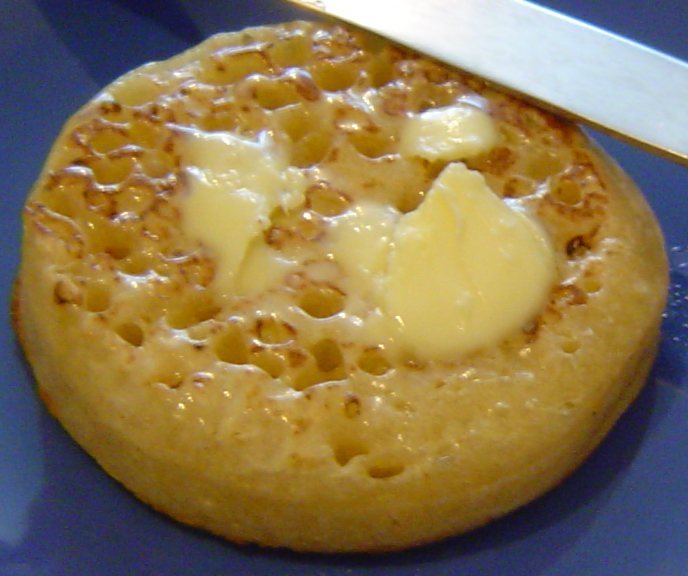
Crumpets were first made by the Anglo-Saxons in England, Wales and Ireland in the 1600s. They are a thick type of pancake made with an unsweetened batter of water, milk, flour and yeast that is poured into a crumpet ring and cooked on one side, which gives them a distinctive spongy texture. Crumpets are a common breakfast food across the UK today, but they are also eaten for brunch or in the afternoon as a snack. They are usually served with butter and a cup of English breakfast tea.


2. Steak and Kidney Pie

File:Steak pie 09012012.JPG - Wikimedia Commons

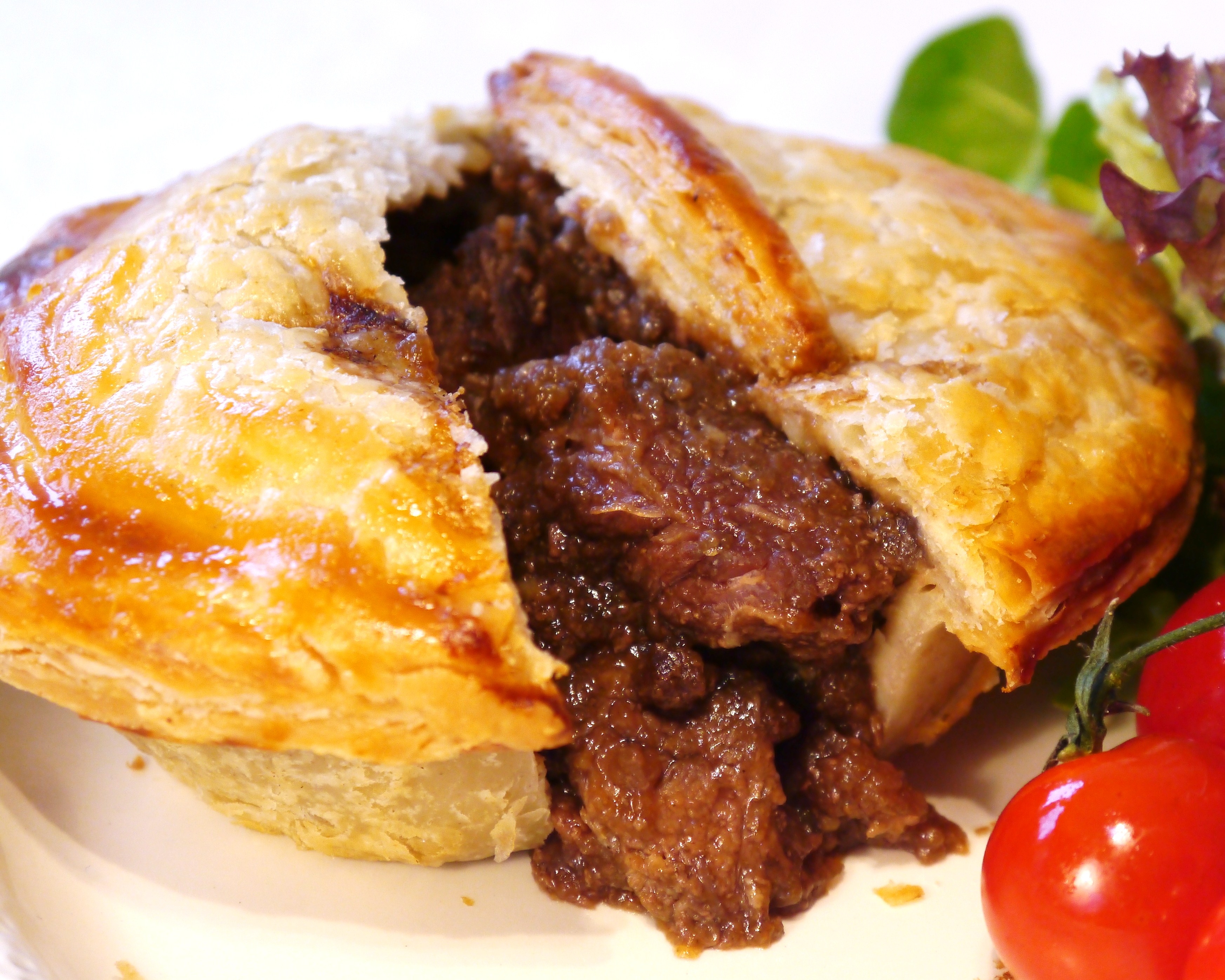
This delicious recipe first appeared in 1861 and is thought to have originally come from Sussex in England. Beef steak and kidney meat is roughly chopped, mixed with gravy stock and sealed within a casing of suet pastry. The kidney gives the tender meat a distinctive flavour that is best served with mashed potatoes and seasonal vegetables. Modern versions are also commonly served with chips (thick-cut potato fries). 


1. Yorkshire Pudding

Best of British Food - Yorkshire pudding | Roast beef with Y… | Flickr

Roast beef and Yorkshire pudding is an iconic British dish, but Yorkshire puddings are a versatile and popular English side dish that can be served many different ways. Made with a batter of flour, eggs, milk, water and salt, the perfect Yorkshire is puffed with air and crisp on top, with a deliciously soft and squidgy bottom. You may have noticed that the ingredients for Yorkshire pudding are very similar to those of pancakes, but the unusual texture of the Yorkshire pudding can only be achieved by adding the batter to very hot oil.

Originally invented as a cheap and economical stomach-filler for working class families, the distinctive shape makes them perfect to fill with gravy and stuffing or sausages, as with Toad in the Hole. Leftover Yorkshire puddings are also sometimes filled with jam or served alongside an English breakfast with beans or tomatoes. Yorkshire pudding wraps with a choice of sweet and savoury fillings have also emerged in recent years as a contemporary street food trend at festivals and markets.


Activity 2
Make your own sentences to describe your favourite cuisine or cuisine from your country. 

Activity 3
What do you think about British cuisine? Have you heard about the dishes in this article? Which ones would you like to try?


Thursday, 12 December 2019

5 Most Common Phrasal Verbs and How to Use Them

Suitable for intermediate CEFR B1+

What is a phrasal verb?

#phrasalverbs A phrasal verb is a phrase that consists of a verb and one or more particles. The particle is usually a preposition or an adverb, which changes the meaning of the main verb.

A verb is an action word. For example, help, run, put, do or make.

A preposition is a word that describes the relationship between two nouns. For example, in, on, at, above, under, behind, etc. are used to describe the relative location between people and items.

An adverb is a word that describes a verb. Many (but not all) adverbs in English end with -ly, like  suddenly, early, slowly, easily.

Phrasal verbs are very common in spoken English, so you probably already know some of them. For example, you may have heard someone say ''come on, let's go'' or ''come on, you can do it'' in conversation. The word ''come'' on its own means to approach or to move towards something, but adding the preposition ''on'' changes the meaning to an expression of encouragement.


The bad news...

There are hundreds of phrasal verbs in English, enough to fill a whole dictionary, and it will no doubt take some time and practise to become comfortable using them in your conversations. It is important to know that often a phrasal verb has a very different meaning to the main verb on its own, so if you are unsure of the meaning, ensure you are looking it up in a phrasal verb dictionary.


As there are so many, it can be useful to create smaller groups of phrasal verbs according to their meaning or function, which will make them easier to learn. I recommend choosing 5 phrasal verbs to focus on at one time. Once you have mastered 5 and you feel confident using them in conversations, you can choose another set.

Sometimes the particle in a phrasal verb can move in the sentence, these are called transitive phrasal verbs. Phrasal verbs that have a particle that can't move in a sentence are called intransitive. Don't worry too much about this because in my phrasal verbs series I will indicate whether a phrasal verb is transitive or intransitive and give example sentences to help you.


The good news...

Phrasal verbs are everywhere in English! You can start by looking or listening for them. If you notice a verb that is often used in conversation with a preposition or an adverb, there is a good chance it could be a phrasal verb. You can check if it is a phrasal verb or just a common collocation by looking it up in a phrasal verb dictionary.


Let's start by learning 5 of the most common phrasal verbs in the English language.


1. Have on 
Have on means wearing or to wear something and it is transitive. For example, you can say  ''she has on a new pair of shoes'' or ''she has a new pair of shoes on.'' Notice that the particle is always separated from the main verb in a transitive sentence with a noun (phrase) or a pronoun. Also notice that the main verb must change according to the tense, just like with all verbs in English. In these present simple sentences, have changes to has as it is conjugated with she.

2. Bring back
Bring back means to return something and it is transitive. For example, a teacher might say ''please complete this task at home and bring it back on Thursday'' or if you led a pen to someone in class you might say ''please can you bring it back when you've finished.''

3. Add up
Add up means to increase the amount of something or that something makes sense, and it is a transitive phrasal verb. For example, in a restaurant with your friends you might want to pay for only some of the bill and ask ''Can you add up how much I owe?'' If you're confused about a friend's story and you think they may be lying you might say ''It doesn't add up.''

4. End up 
To end up means to finally arrive in a particular location or situation and it is intransitive. ''We wanted to go to France today, but the Ferry was delayed so we ended up in Dover.''

5. Find out 
Find out means to discover some new information and it is intransitive. ''I just found out my sister is pregnant.''


Do you know some more phrasal verbs? Write them in the comments or practise making your own sentences with these examples! 

Thursday, 17 October 2019

Vocabulary for Beginners: Autumn Vocabulary

Suitable for beginners CEFR A1+

The leaves are turning shades of golden yellow, burnt orange and red here in southern England. Squirrels are collecting acorns, pine cones are scattered on the ground and children are playing with conkers. It's getting dark earlier and rain clouds are gathering. Autumn is here, so wrap-up warm. It's my favourite time of the year!

Leaves (n.) (pl.)  Leaf (s.)

 Image result for leaves


Leaves fall from the trees in autumn.


Squirrel (n.)

Image result for squirrels


Squirrels are small mammals that live in trees and feed on nuts and seeds.  


Acorns (n.)

 Image result for acorn


Acorns grow on oak trees.  


Pine cone (n.)

 Image result for pine cones

Pine cones are traditionally used to make a variety of seasonal decorations. 


To scatter (v.)
Image result for scattering seeds 

The man is scattering seeds on the ground. 


Conkers (n.)


Image result for conkers 

Conkers are fun for children to play with.


Rain clouds

Image result for rain clouds 

These clouds bring rain.


Wrap-up

Image result for wrap-up warm 

Wear a scarf or a hat and coat to wrap-up warm. 


Do you know any other autumn vocabulary? Write words in the comments!

Stop Saying VERY! Use These Advanced Adjectives to Instantly Improve Your English Fluency

 #vocabulary #English #ielts #ieltsprep #ieltsspeaking   Very is one of the most overused words in the English language and the worst thing ...