Friday, 10 April 2020

7 Easter Traditions in the UK


Suitable for pre-intermediate CEFR B1+


#Easter is a Christian religious holiday celebrated around the world that commemorates the crucifixion of Jesus Christ on the cross and his subsequent resurrection. Nowadays, Easter is also celebrated as a springtime cultural tradition representing the coming of new life for many atheists and people of other religious traditions living in countries with Christian heritage. The UK has a very strong Christian tradition, though Christianity is now declining as more people identify as non-religious. Here are seven Easter traditions that are common in the UK. 

1. Hot Cross Buns


Hot Cross Buns | Jan Smith | Flickr


These delicious sweet fruit buns are marked with the sign of the cross that represents the crucifixion of Christ. Traditionally eaten on Good Friday, the day of Jesus’ death, they are best served toasted with a little butter. Today you can find many gourmet hot cross buns available in supermarkets with different flavours, such as chocolate, apple, cinnamon and orange, though personally I think the original fruit bun is both cheaper and tastier! 


2. Decorate an Easter Tree


Easter Eggs Tree - Free photo on Pixabay


The tree, with long roots and branches, represents growth and the cycle of life, whereas the delicate painted eggs symbolise rebirth and the coming of new life. Many people in the UK decorate an Easter tree for their living room or dining room during the holy week and egg painting and decorating is a popular craft activity for children. 


3. Easter Eggs


File:Easter-Eggs-1.jpg - Wikipedia


Eggs have symbolised the resurrection of Christ throughout history, though the eating of eggs was originally forbidden during the holy week. Nowadays, the giving of chocolate eggs is probably the most popular and well-known Easter tradition worldwide. The first chocolate eggs appeared in France and Germany in the 19th Century and the method has been perfected by chocolatiers across the world ever since. 

4. Morris dancing


File:Morris Dancers, York (26579460201).jpg - Wikimedia Commons


This traditional English folkdance dating back to the 15th Century is based on rhythmic stepping by groups of dancers usually dressed in white. Dancers often wear bells on their shins and clap sticks together or wave handkerchiefs in time with accordion music. Dancers may also wear ribbons and hats with colours to represent their county or region. Morris dancing performances are common during Easter weekend and May day to celebrate the coming of spring.


5. Roast lamb 


File:Roast Lamb.jpg - Wikimedia Commons


Sheep farming is common in parts of the UK including Wales, Scotland and North West England. Roast lamb is traditionally served on Easter Sunday in many homes as it is close to the lambing season. Roast lamb is usually served with roast or new potatoes and spring vegetables such as broccoli and carrots. 


6. The Easter Bunny


File:Easterbunny 1.jpg - Wikimedia Commons


The rabbit, famous for giving birth to many babies called kittens, has long been a folkloric symbol of new life at Easter. It is thought that the Easter bunny first appeared in the 19th Century, bringing baskets of coloured eggs and sweets to children or hiding them to be found on Easter Sunday. 


7. Easter bonnets


Easter Bonnet Parade | Snaps from the 2019 Easter Bonnet Par… | Flickr


This tradition comes from a time when it was common for people to wear their finest new clothes to church at Easter, which often included a hat for women to cover their hair. Nowadays Easter bonnets are made in all sorts of strange and colourful designs as part of Easter or springtime festivals and parades.


Are there any strange or interesting Easter traditions from your country? Please share in the comments! 


#HappyEaster

Thursday, 9 April 2020

Top 10 Best TV Shows to Learn English

Suitable for intermediate CEFR B1+


#EnglishTV #BritishTV


One of the most important factors in language learning is motivation. If you are motivated, you are much more likely to set yourself targets and enjoy learning. Watching TV shows in English is not only a great way to increase your motivation, it also offers authentic listening practice that will help you become familiar with the natural speed of conversation. If you’re not yet confident, listen with the subtitles on in English (don’t listen with subtitles in your own language, as you won’t learn easily). You can also pause and replay as much as you need! It’s a great idea to keep a notebook beside you to write new and interesting vocabulary.


These are my top 10 recommended TV shows for English learners. This list includes both American and British programmes and I’ve tried to include a range of genres to suit all tastes. You are bound to find something that interests you!


1. Breaking Bad 


File:Breaking Bad logo.svg - Wikimedia Commons


#BreakingBad has been named the greatest TV series of all time. Walter White is an ordinary high school chemistry teacher. When he is diagnosed with cancer, he finds himself desperately short of money to pay his medical bills and embarks upon a new business venture with a former student, Jesse Pinkman, as a means of providing financial security for his family. However, things don’t go as planned and both characters become deeply involved in a dark criminal underworld with consequences neither of them expected. Adult viewing only.


2. The Tudors 


 File:Thetudors-logo.svg - Wikimedia Commons


#Tudors This British drama follows the life and history of the infamous King Henry VIII and his six wives. Although this drama is not entirely historically accurate, it brings an important part of British history to life. There’s gruesome violence and a lot of sex. For adults only.


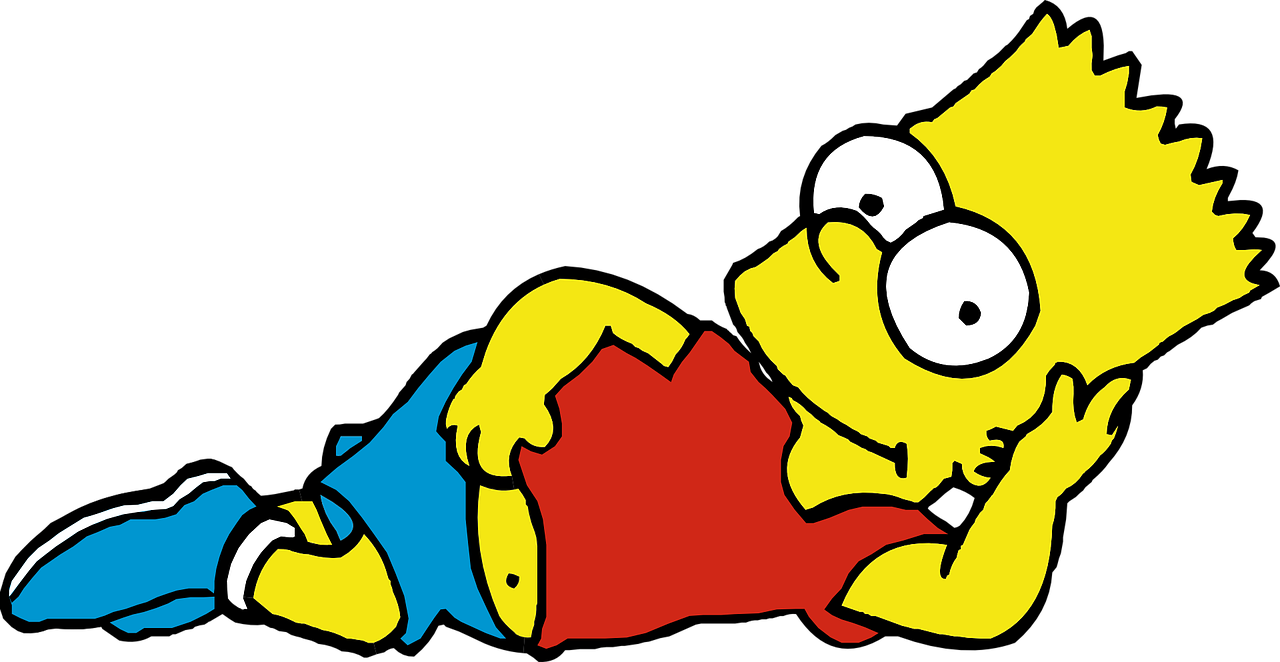
3. The Simpsons


 Download free photo of Bart,simpson,comics,vector,simpsons - from ...


#Simpsons The Simpsons is a long-running animated comedy series that follows the life of the Simpson family – Homer, Marge, Lisa and Bart, in Springfield, America. It is so popular, you’ve probably seen episodes in your language, but there can be nothing better than hearing it in its original English. The Simpsons is not just a cartoon series for kids, many of the jokes appeal to adults and children alike, and the language is perfect for English learners because it is simple to follow. The show will also familiarise you with many aspects of American life and culture, and with so many episodes, this series will certainly keep you busy for a while!


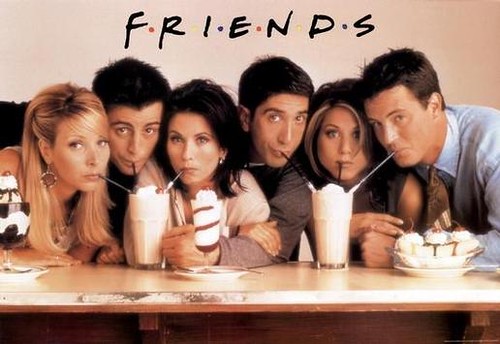
4. Friends


friends | Geoffrey Chandler | Flickr


#Friends is a hugely popular long-running American sitcom following six friends living in New York City. The lovable characters and accessible comedy make this show a favourite. It was on TV for 10 years so there are plenty of episodes to keep you entertained whilst improving your English.


5. Black Mirror


 Black Mirror | mezclaconfusa | Flickr


#BlackMirror This British dystopian drama series explores the negative consequences of technology. Every episode is set in a different future or near-present reality with different characters and technology with different, dark and sinister consequences. This makes this show easy to dip in and out of whilst studying English. You don’t need to remember any complex plot lines, and you can choose any episode and watch them in any order. Age 15+


6. Sherlock 


ملف:Benedict Cumberbatch filming Sherlock cropped2.jpg - ويكيبيديا


#Sherlock puts a modern twist on the criminal investigations of probably the most famous detective in the world – Sherlock Holmes, and his assistant, Dr Watson. Mild peril with Benedict Cumberbatch. Age 12+


7. Doctor Who


Doctor Who | Programme Name: Doctor Who - TX: n/a - Episode:… | Flickr


#DoctorWho This British sci-fi follows the time-travelling adventures of an alien called ‘The Doctor’ and a group of companions as they travel across the universe in a spaceship disguised as a 1960s blue police box called the TARDIS. Fun for all the family.


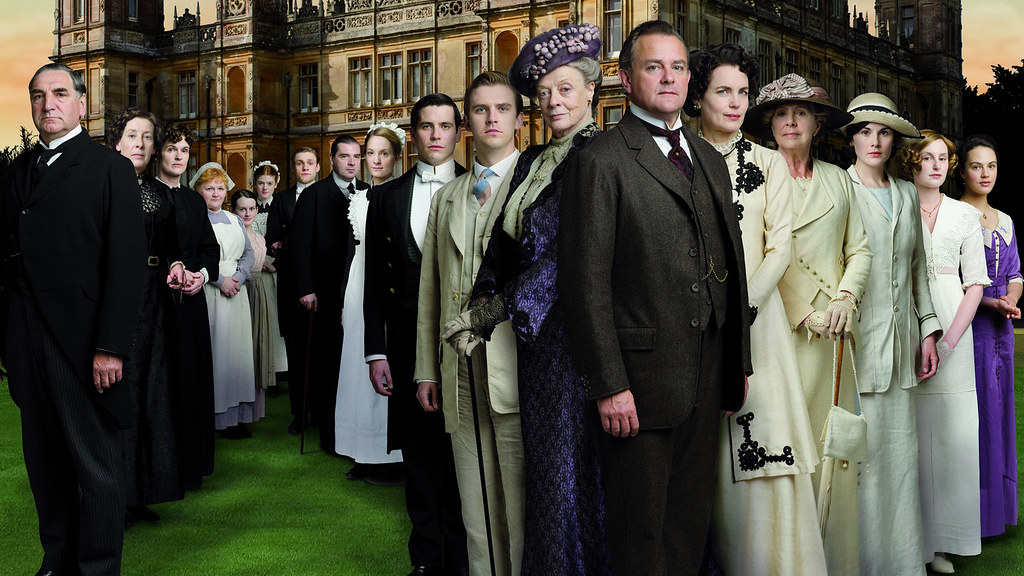
8. Downton Abbey 


downton-abbey | lafiguradelpadre Congreso | Flickr


#Downton Historical drama set in the early 20th century follows the life of a British aristocrat, his family and staff living on a grand country estate. A chance to learn more about British history and society while also practising your English. 


9. Top Gear


 File:TopGear.png - Wikimedia Commons


#TopGear One for the petrolheads. This extremely popular BBC motoring programme reviews vehicles from supercars to family hatchbacks, and includes a wide range of motoring issues, adventurous motoring challenges, special races and celebrity time-trials. Entertainment suitable for all the family.


10. Only Fools and Horses

 File:DelBoyCushtyMan.jpg - Wikimedia Commons


#OFAH This classic British comedy from the 1980s follows the misadventures of Rodney and Del Boy Trotter as they work from the streets of London buying and selling what they can in the hope that they will one day be millionaires. London accents and plenty of slang! Fun for all the family.


So, there you have it. My top 10 TV shows to learn English. I wish you many hours of great entertainment!

Is there another show you love to watch to help you learn English? Tell me why in the comments.

Monday, 10 February 2020

IELTS Grammar: As though or Although?

Suitable for upper-intermediate CEFR B2+

#vocabulary #IELTSprep #IELTS

This is a question students often raise in IELTS preparation and other exam classes, and a common mistake that can be found in essay writing more generally.  In fact because the words sound very similar in speech, it is a mistake that sometimes even native speakers of English can make. 

However, these words have quite different meanings and it is important to learn to use them correctly in your professional or academic writing practice, as not doing so could lose you valuable marks in your English exams or even lead to a personal reputation for inaccuracy or incompetence. 

So what exactly is the difference between as though and although?


As though is a conjunction used to draw a likeness or similarity to something. It can be used to describe a possible explanation for something or to describe when something appears to be the case but it is not. It can be used interchangeably with the phrase as if and most often appears in the middle of a sentence.

For example:

He looked as though he'd seen a ghost. (likeness, similarity)

It feels as though there is unfinished business. (possible explanation)

People exposed to the virus must be treated as though they are carriers. (something that appears to be the case but might not be)


Although is a conjunction meaning in spite of the fact that or even though. It can be used to make a contrast in the same way as but and however. It often appears at the beginning of a sentence or in the middle of a sentence.

For example:

He travelled alone, although he knew it was dangerous. 

Although I've been there before, I can't remember how to get there.

It was rather cold, although the sun was shining brightly. 


Now it's your turn

Choose as though or although in the following sentences and post your answers in the comments below.

1. The battle was won, ________ there were many casualties. 
2. ________ they are expensive, they last a very long time. 
3. She danced _________ no one was watching.
4. I smiled and nodded ________ I understood him. 
5. I kept nodding _______ I didn't understand him.


Sources
https://www.collinsdictionary.com/dictionary/english/as-though
https://dictionary.cambridge.org/dictionary/english/although


Saturday, 11 January 2020

Past Simple


Past Simple

past present future | fosco lucarelli | Flickr


#grammar Past simple is used to communicate an action that didn’t happen, happened once or happened several times in the past. 


It is often used to give details about an event in the news or in a story. Regular verbs in positive sentences in past simple use the suffix  -ed

Positive
Negative
Question
They scored the winning goal.
They didn’t score the winning goal.
Did they score the winning goal?
He ordered a pizza.
He didn’t order a pizza.
Did he order a pizza?
We asked her to move her car.
We didn’t ask her to move her car.
Did you ask her to move her car?


In the negative form, we use the auxiliary verb do in its past form did with the negative not. This can be shortened to didn’t. We then use the bare infinitive of the main verb.

Negative: didn’t + bare infinitive (without to)

For questions the auxiliary verb did comes before the pronoun.

Question: did + pronoun + bare infinitive (without to)

There are three important spelling rules to remember when using regular verbs with -ed

1
With verbs ending in e, add -d. For example, the verb score changes to scored.
2
With some verbs ending in a short, hard vowel sound or that end in the letter L after a vowel, the last letter is doubled. For example, the verb admit changes to admitted, and the verb travel changes to travelled.
3
With verbs ending in -y, the letter y changes to i. For example, the verb carry changes to carried.

However, there are many irregular verbs that do not follow this pattern and must be learnt individually. One of the most commonly used and most important is the verb to be. The verb to be is unusual because it can be used to make negatives and question forms without an auxiliary verb.

Positive
Negative
Question
She was happy.
She wasn’t happy.
Was she happy?
They were late to the party.
They weren’t late to the party.
Were they late to the party?
We were impressed.
We weren’t impressed.
Were you impressed?

Sentences in past simple can include a time marker when necessary.

Mr Smith broke his arm last week.
I went on holiday last year.
She flew to Japan yesterday.

Use past simple to report several actions that happened in sequence

He came in, slammed the door and threw his keys on the table. 


or to report an action that happened in the middle of another action.

The children were coming in from the playground when the alarm sounded.

Past simple also appears in the first clause of second conditional to talk about hypothetical situations that are unlikely to happen:


If
I      
won      
the lottery  


,
I would 
buy a house
he
lived
In Australia
he would
be better off
she
went
on holiday
she would
go sightseeing
we
moved
to Canada
we would
live near the mountains
they
had
children
they would
take them to the park


Exercise 1: Use the words to make sentences in past simple

1. dog / run / street

2. make / she / a sandwich.

3. they / the shopping / carry.

4. be / it / yesterday / cold.

5. he / not / holiday / last year / go


Exercise 2: Use the words to write questions in past simple

6. you / out / at the weekend / go

7. visit / she / family

8. good time / have / they

9. be / good / film

10.  car / left / turn


Write your answers in the comments


Sources

https://learnenglish.britishcouncil.org/english-grammar-reference/past-simple
Swan, M. (2005) Practical English Usage (3rd Edition): OUP: Oxford

Thursday, 12 December 2019

5 Most Common Phrasal Verbs and How to Use Them

Suitable for intermediate CEFR B1+

What is a phrasal verb?

#phrasalverbs A phrasal verb is a phrase that consists of a verb and one or more particles. The particle is usually a preposition or an adverb, which changes the meaning of the main verb.

A verb is an action word. For example, help, run, put, do or make.

A preposition is a word that describes the relationship between two nouns. For example, in, on, at, above, under, behind, etc. are used to describe the relative location between people and items.

An adverb is a word that describes a verb. Many (but not all) adverbs in English end with -ly, like  suddenly, early, slowly, easily.

Phrasal verbs are very common in spoken English, so you probably already know some of them. For example, you may have heard someone say ''come on, let's go'' or ''come on, you can do it'' in conversation. The word ''come'' on its own means to approach or to move towards something, but adding the preposition ''on'' changes the meaning to an expression of encouragement.


The bad news...

There are hundreds of phrasal verbs in English, enough to fill a whole dictionary, and it will no doubt take some time and practise to become comfortable using them in your conversations. It is important to know that often a phrasal verb has a very different meaning to the main verb on its own, so if you are unsure of the meaning, ensure you are looking it up in a phrasal verb dictionary.


As there are so many, it can be useful to create smaller groups of phrasal verbs according to their meaning or function, which will make them easier to learn. I recommend choosing 5 phrasal verbs to focus on at one time. Once you have mastered 5 and you feel confident using them in conversations, you can choose another set.

Sometimes the particle in a phrasal verb can move in the sentence, these are called transitive phrasal verbs. Phrasal verbs that have a particle that can't move in a sentence are called intransitive. Don't worry too much about this because in my phrasal verbs series I will indicate whether a phrasal verb is transitive or intransitive and give example sentences to help you.


The good news...

Phrasal verbs are everywhere in English! You can start by looking or listening for them. If you notice a verb that is often used in conversation with a preposition or an adverb, there is a good chance it could be a phrasal verb. You can check if it is a phrasal verb or just a common collocation by looking it up in a phrasal verb dictionary.


Let's start by learning 5 of the most common phrasal verbs in the English language.


1. Have on 
Have on means wearing or to wear something and it is transitive. For example, you can say  ''she has on a new pair of shoes'' or ''she has a new pair of shoes on.'' Notice that the particle is always separated from the main verb in a transitive sentence with a noun (phrase) or a pronoun. Also notice that the main verb must change according to the tense, just like with all verbs in English. In these present simple sentences, have changes to has as it is conjugated with she.

2. Bring back
Bring back means to return something and it is transitive. For example, a teacher might say ''please complete this task at home and bring it back on Thursday'' or if you led a pen to someone in class you might say ''please can you bring it back when you've finished.''

3. Add up
Add up means to increase the amount of something or that something makes sense, and it is a transitive phrasal verb. For example, in a restaurant with your friends you might want to pay for only some of the bill and ask ''Can you add up how much I owe?'' If you're confused about a friend's story and you think they may be lying you might say ''It doesn't add up.''

4. End up 
To end up means to finally arrive in a particular location or situation and it is intransitive. ''We wanted to go to France today, but the Ferry was delayed so we ended up in Dover.''

5. Find out 
Find out means to discover some new information and it is intransitive. ''I just found out my sister is pregnant.''


Do you know some more phrasal verbs? Write them in the comments or practise making your own sentences with these examples! 

Stop Saying VERY! Use These Advanced Adjectives to Instantly Improve Your English Fluency

 #vocabulary #English #ielts #ieltsprep #ieltsspeaking   Very is one of the most overused words in the English language and the worst thing ...